
Henan Jinlei Machinery Co., Ltd.
24 hours online

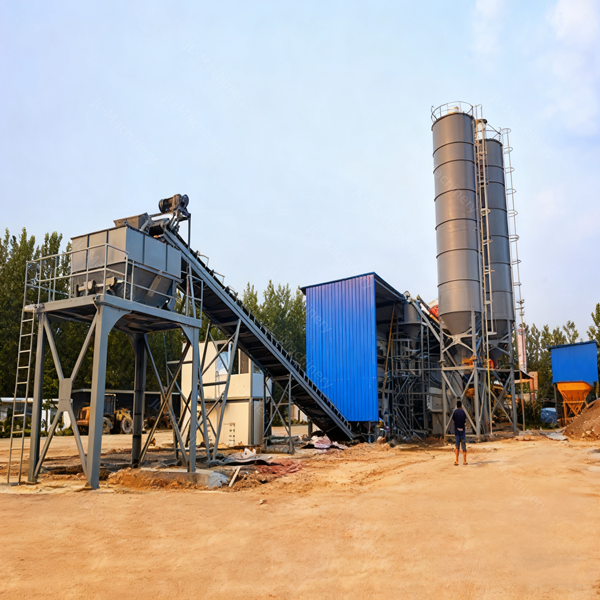
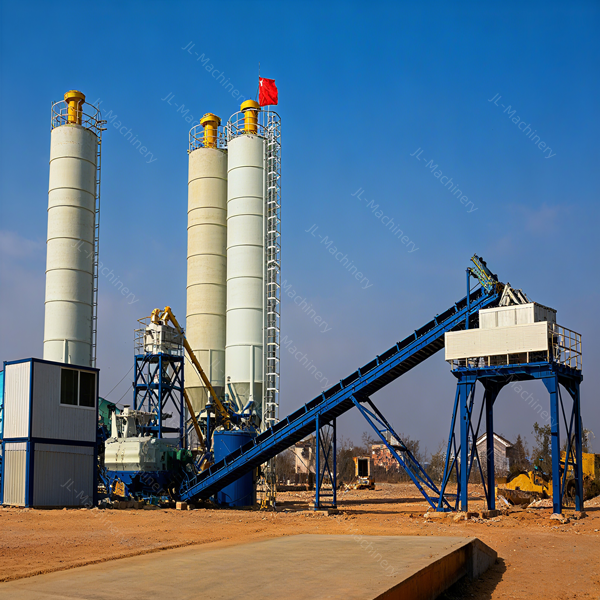
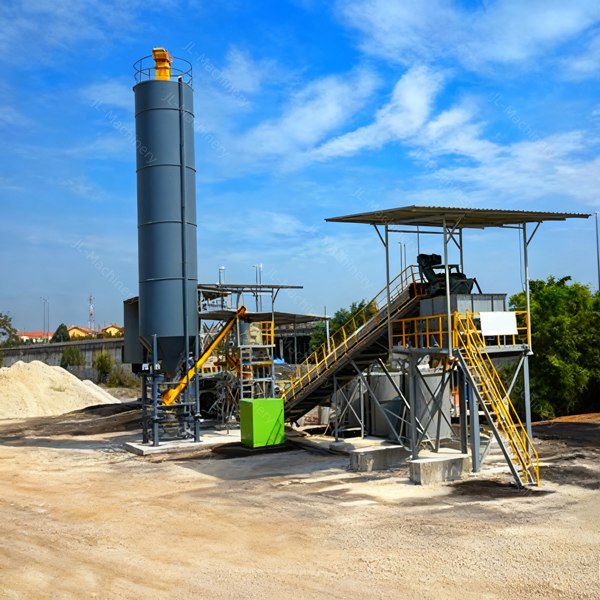
Stable Soil Central Mix Plant

Application Areas: Full-line subgrade base course construction for highways and first-class roads. Infrastructure construction for large airport runways and port yards. Extra-large municipal projects and industrial park road network construction. Production and supply bases for commercial stabilized soil / water-stabilized material. Critical projects with extremely stringent requirements for environmental protection and project quality.
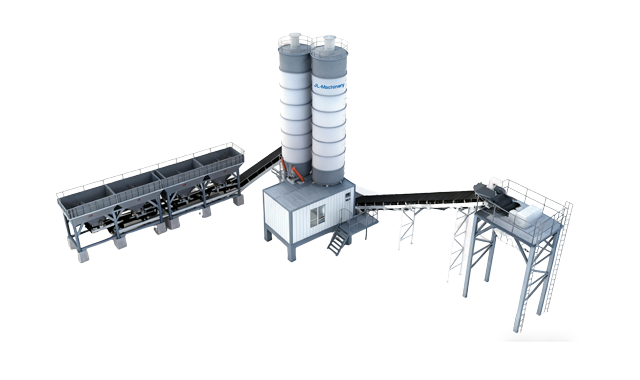
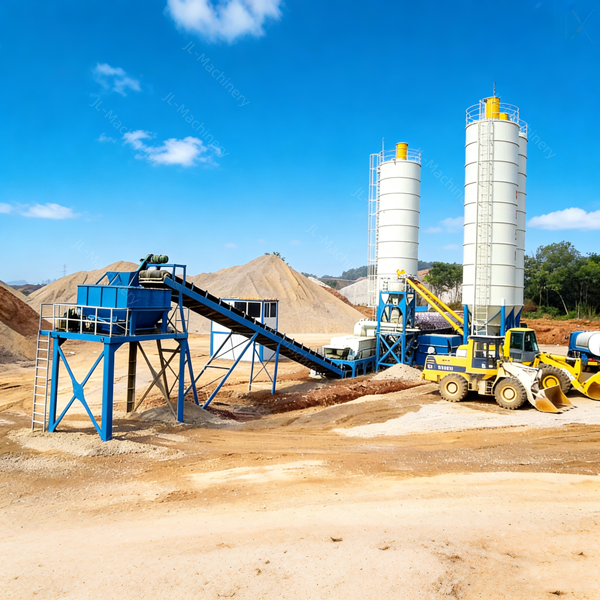
WCB Series
Product Model
160kW~250kW
Motor Power
400T/h~800T/h
Capacity
Stable Soil Central Mix Plant
60S Quick response
30 min Technical reply
24h design proposal
365 days to receive service needs
Stable Soil Central Mix Plant

Main Structural Composition (Systematic Modules)


Aggregate Batching System:


Aggregate Storage Bins: Typically 4-8 independent bins constructed from steel plate or concrete, with large capacity for storing multiple specifications of aggregates.

Feeding System: Commonly uses a loader to feed aggregates into the bins, or employs an underground hopper with an inclined belt conveyor for automatic feeding.

Precise Metering System: Each bin is equipped with a high-precision variable frequency belt feeder or vibrating feeder underneath, achieving continuous and accurate metering of aggregates.


Filler Supply System:


Large Filler Silos: Typically vertical tanks with a capacity of 100-300 tons, used for storing cement, fly ash, lime, etc. The number is configured based on mix ratio requirements (e.g., 2-4 units).

Conveying and Metering: Filler is conveyed via screw conveyors to high-precision filler scales (mostly screw scales or loss-in-weight scales) for metering, achieving an accuracy of ±0.5% to ±1%.


Water Supply System:


- Includes large water storage tanks, water pumps, pipelines, and high-precision flow meters or water scales, ensuring precise control of the water-cement ratio.


Mixing System – Core Unit:


Twin-Shaft Continuous Mixer: The mainstream choice, featuring intensive mixing, continuous discharge, and extremely high efficiency. Advanced shaft end sealing technology prevents slurry leakage.

Twin-Cylinder Twin-Shaft Continuous Mixer: Optimizes the mixing process and extends mixing time to achieve optimal mixture uniformity, thereby producing finished material with stable quality and excellent performance.


Finished Material Conveying and Storage System:


Finished Material Belt Conveyor: Transports the mixed material to the storage area.

Large Finished Material Silo: Typically with a capacity of around 30 tons. Used to buffer production and transportation imbalances, enabling uninterrupted production and rapid loading.

Direct Discharge into Storage Shed: For ultra-high-capacity plants, the mixture may be discharged directly into an enclosed storage shed, where multiple loaders perform simultaneous loading.


Steel Structure Main Frame and Control System:


Main Frame: A large steel structure that integrates all modules and is fixed onto a concrete foundation.

Fully Automatic Control System: The core brain. Utilizes an industrial PC (IPC) + programmable logic controller (PLC) to achieve fully automated control from batching and mixing to discharge, featuring recipe management, production data recording, report printing, fault diagnosis, and remote monitoring.


Advanced Environmental Protection System (Modern Standard):


Centralized Dust Collection System: Dust collection hoods are installed at all dust generation points, such as the tops of filler silos, metering scales, and mixer inlets.

Enclosed or Semi-Enclosed Structure: The entire plant is enclosed, especially the batching and mixing areas, effectively suppressing dust and noise.

Sand and Stone Separation and Water Recovery System (Optional): Wastewater from cleaning mixers and vehicles is treated and recycled, achieving zero discharge.


Product Advantage

Product Advantage

Outstanding Features and Advantages


Ultra-High Production Capacity and Stability: Single-plant hourly output can reach 400–800 tons, reliably supplying the demands of large-scale projects.

Excellent Metering Accuracy and Mixing Quality: Utilizes the most precise metering components and proven mixing technology, producing mixtures with extremely high uniformity and strength consistency, ensuring project quality from the source.

High Degree of Automation and Intelligence: “One-key” operation reduces human error, and production data is fully traceable, meeting modern construction management requirements.

Powerful Environmental Protection Capability: Can be equipped with industry-leading dust collection, noise reduction, and wastewater recovery systems to meet construction requirements in urban and environmentally sensitive areas.

Long-Term Operational Economy: Although initial investment and foundation construction costs are higher, its long service life, high production capacity, and exceptional reliability result in lower unit output cost and significant economic benefits over long-term, high-volume production.

Excellent Material Adaptability: Capable of handling larger aggregate sizes (e.g., ≤40mm), equipped with more bins, and offering flexible formula adjustments.


Working Principle

Working Principle

Its working process is an industrial production process of precise metering → forced mixing:

Precise Batching: According to the preset formula, the control system simultaneously activates each aggregate feeder, filler scale, and water supply unit, feeding all raw materials in precise proportions.

Aggregate Conveying: The metered aggregates and filler converge onto the collecting belt conveyor and are transported to the mixer; water is simultaneously sprayed in through nozzles.

Intensive Mixing: Inside the twin-shaft mixer, all materials are intensely sheared, tossed, and circulated by high-speed rotating blades, achieving high uniformity within a short period (typically 20–40 seconds).

Finished Product Storage and Discharge: The uniform mixture is conveyed by the finished product belt conveyor into a large-capacity finished product silo for temporary storage, waiting to be transported by dump trucks to the construction site.

Specification

*The output will vary according to different materials, feed particle size and other factors

Typical Models and Specifications of Stabilized Soil Mixing Plant

ParameterWCB400WCB500WCB600WCB700WCB800WCB900
Rated Productivity400 t/h500 t/h600 t/h700 t/h800 t/h900 t/h
Installed Power~130 kW~160 kW~190 kW~220 kW~250 kW~300 kW
Number of Aggregate Bins4 Bins4-5 Bins5-6 Bins6 Bins6-8 Bins8+ Bins
Aggregate Particle Size≤40 mm≤40 mm≤40 mm≤40 mm≤40 mm≤40 mm
Filler Silo Capacity2×100t2×150t2×200t3×200t3×200t4×200t
Metering AccuracyAggregate: ≤±2%
Filler: ≤±1%
Water: ≤±1%
Aggregate: ≤±2%
Filler: ≤±1%
Water: ≤±1%
Aggregate: ≤±2%
Filler: ≤±1%
Water: ≤±1%
Aggregate: ≤±2%
Filler: ≤±1%
Water: ≤±1%
Aggregate: ≤±2%
Filler: ≤±1%
Water: ≤±1%
Aggregate: ≤±2%
Filler: ≤±1%
Water: ≤±1%
MixerTwin-Shaft ContinuousTwin-Shaft ContinuousTwin-Shaft ContinuousTwin-Shaft ContinuousTwin-Shaft ContinuousTwin-Shaft Continuous
Finished Material Silo Capacity50 t80 t100 t150 t200 t200 t+
Control MethodFully Automatic Computer Control
(PLC + Industrial PC)
Fully Automatic Computer Control
(PLC + Industrial PC)
Fully Automatic Computer Control
(PLC + Industrial PC)
Fully Automatic Computer Control
(PLC + Industrial PC)
Fully Automatic Computer Control
(PLC + Industrial PC)
Fully Automatic Computer Control
(PLC + Industrial PC)
Key FeaturesEconomical & Practical
Stationary Plant
Medium-Scale Projects
Main Plant
High-Grade Highways
Mainstream Plant
Large-Scale Projects
High-Efficiency Plant
High Output
Heavy-Duty Plant
Ultra-Large /
Commercial Plant


Note: The above parameters are typical industry ranges; actual values may vary by manufacturer and configuration.


In-Depth Interpretation of Key Parameters and Selection Significance

📈 Rated Productivity (Core Indicator)

Definition: The number of tons of qualified stabilized soil produced per hour by the equipment under ideal operating conditions.

Selection Logic: Calculate the required hourly output based on total project volume, planned construction period, and daily operating hours. It is recommended to select a model with 20%-30% higher capacity than the theoretical maximum demand to account for temporary production reductions due to equipment maintenance, adverse weather, transportation delays, etc., ensuring project schedule safety.

Model Classification:

400-500 t/h: Medium stationary plant, suitable for first-class highways and large municipal projects.

600-700 t/h: Mainstream and high-end choice, fully meeting the construction intensity requirements of national high-grade roads such as highways and high-speed railways.

800 t/h and above: Extra-large projects, regional commercial stabilized soil supply centers, or projects with extremely demanding schedules.

📦 Number of Aggregate Bins (Determines Formula Flexibility)

The quantity directly corresponds to the types of different specification aggregates (e.g., 1# crushed stone, 2# crushed stone, 3# stone chips, manufactured sand, etc.) that can be independently metered and proportioned.

4 Bins: Meets the basic production requirements of most conventional water-stabilized crushed stone (e.g., cement-stabilized graded crushed stone).

6 Bins or More: Provides extremely high formula flexibility, enabling precise implementation of more complex and optimized aggregate gradation designs, which helps improve mixture performance (e.g., strength, crack resistance) and adapts to multiple material sources.

📏 Maximum Aggregate Particle Size (Must Match Design)

Stationary equipment typically can handle aggregate up to ≤40 mm, fully covering the gradation requirements for base and subbase layers.

During selection, it is crucial to verify the maximum nominal particle size of the base material in the construction drawings, ensuring the equipment's capacity meets or exceeds the design requirements.

⚖️ Metering Accuracy (Quality Lifeline)

Accuracy standards for stationary plants are generally higher than for mobile plants (especially for filler and water).

Filler (Cement) Accuracy ±1%: This is the core factor ensuring stable and compliant unconfined compressive strength of the mixture.

Water Accuracy ±1%: Precise water-cement ratio is key to controlling optimum moisture content, ensuring compaction density, and preventing drying shrinkage cracks.

High accuracy means more stable project quality and less material waste.

🚛 Finished Material Silo Capacity (Affects Continuity and Efficiency)

A large-capacity finished material silo is a guarantee of high efficiency for stationary plants. It enables "uninterrupted production, no waiting for loading."

The larger the capacity, the greater the fault tolerance for transportation fleet scheduling, effectively absorbing fluctuations from vehicle queuing or temporary shortages, allowing the mixer to operate continuously at its optimal state.

⚡ Installed Power and Environmental Protection Configuration (Key to Operating Costs and Project Approval)

Installed Power: Determines the initial investment in transformer capacity and the long-term electricity cost during production. Power consumption increases sharply with output.

Environmental Protection Configuration: Modern stationary plants typically come standard with full enclosure and centralized pulse-jet baghouse dust collectors. In areas with strict environmental regulations, additional considerations such as asphalt fume treatment (if producing asphalt-containing base materials) and rainwater recovery systems may be required. Environmental investment is the "entry ticket" for project approval.


Suggested Selection Decision Process

Step 1: Determine Output and Materials: Calculate the required production rate, and identify the maximum aggregate particle size and the number of aggregate types.

Step 2: Assess Site and Infrastructure: Verify that there is sufficient space (including for the main equipment, material stockpiles, roads, and office areas) and plan for a robust concrete foundation.

Step 3: Calculate Power and Environmental Requirements: Confirm that the power grid can meet the equipment's power demand, and understand local environmental standards to determine the required level of enclosure and dust collection.

Step 4: Balance Investment and Operation: Among the models that meet the first three steps, select the most cost-effective option. Typically, the WCB600/WCB700 models represent the "sweet spot" for most high-standard projects, offering the best balance of performance, price, and reliability.

Summary

The model spectrum of stationary stabilized soil mixing plants clearly reflects the industrial equipment logic of "greater capacity comes with greater responsibility (configuration and cost)." When selecting, it is not just about choosing an "output number"; it is about choosing a complete set of "storage capacity, metering system, power configuration, environmental protection scheme, and automation level" that matches that output.




MAYBE YOU ARE INTERESTED IN
More+
Forced Batch Asphalt Mixing Plant

Cold Aggregate Supply System

1.  Adopts frequency control for the belt feeders, ensuring reliable performance. The modular design facilitates convenient and efficient installation and transportation.

2.  The hopper discharge gate is adjustable, equipped with a material shortage alarm device, and the feeding direction can be flexibly adjusted.

3.  The conveyor belt is equipped with a deviation prevention protection device.

4.  The belt feeders adopt frequency conversion speed regulation, offering a wide speed range and high working efficiency.

5.  Each discharge outlet is equipped with a material shortage alarm device, which automatically activates in case of material shortage or bridging.

6.  A vibrator is installed on the sand bin to ensure normal operation.

7.  A screen is installed on the top of the cold aggregate hopper to prevent excessive material from entering.

8.  The conveyor belt uses a seamless round belt for smooth operation and long service life.

9.  The feed inlet of the feeding belt conveyor is equipped with a simple screen to prevent excessive material from entering, improving thermal efficiency and ensuring the operational reliability of the drying drum, hot aggregate elevator, and vibrating screen.


Drying Drum System


1.  The digital control system is compatible with diesel, heavy oil, or natural gas.

2.  The professionally designed drying drum flights work efficiently with the burner to achieve optimal heat exchange.

3.  The wide-range material handling capacity, combined with the external design of the drying drum, helps reduce fuel consumption and save energy.

4.  Temperature indicators are installed at the drum exhaust outlet and the drying drum discharge outlet for easy real-time observation and adjustment.

5.  The optimized geometry of the drying drum flights ensures an extremely efficient drying and heating process, reducing energy consumption. Compared with traditional designs, heating efficiency is improved by 30%.

6.  Due to its high heating efficiency, the drum surface temperature is relatively low, significantly shortening the cooling cycle after operation.

7.  Adopts the Honeywell brand intelligent temperature control system.

8.  Uses an Italian brand high combustion efficiency burner to ensure low exhaust emissions (e.g., CO₂, low NOx, SO₂).

9.  Can be equipped with burners adaptable to diesel, heavy oil, natural gas, coal, or multiple fuels.

10. Adopts international standard components, resulting in low maintenance costs.


Elevating System


1.  Clean-type bucket elevator equipped with an automatic tensioning device for smooth operation.

2.  Both the eccentric discharge outlet and the elevator buckets are made of wear-resistant materials, with multiple noise reduction measures incorporated.


Dust Collection System


1.  Multi-stage dust collection system that collects and recycles dust of different sizes separately, improving material utilization.

2.  Uses a large-area filter bag with pulse jet cleaning and a high-pressure reverse blowing system, achieving high dust removal efficiency and meeting environmental protection standards.

3.  Equipped with high and low temperature protection devices. Uses USA Dupont NOMEX filter bags, which are high-temperature resistant, have a long service life, and are easy to replace without special tools.

4.  Equipped with an adjustable induced draft fan damper to reduce energy consumption and improve energy efficiency.

5.  The primary gravity dust collector collects finer dust, reducing consumption.

6.  The baghouse filter (secondary dust collector) achieves emissions of less than 20mg/Nm³, meeting environmental protection requirements.

7.  An intelligent temperature control system automatically opens the cold air valve when the dust temperature exceeds the set value, preventing high-temperature damage to the filter bags.

8.  Uses high-pressure pulse jet cleaning technology, which helps reduce bag wear, extend service life, and enhance dust removal performance.


Screening System


1.  High-strength, durable screen meshes with a segmented layout.

2.  Fully sealed unit with a negative pressure design to prevent dust from escaping.

3.  Optimized vibration and amplitude to enhance screen performance.

4.  The feed inlet is equipped with a wear-resistant and noise-reducing system, which also ensures even distribution of the mixture.

5.  Open-type doors facilitate inspection and simplify the screen replacement process, reducing downtime.

6.  The optimal combination of vibration direction and screen box inclination ensures effective classification and screening efficiency.


Weighing System


1.  An advanced computer automatic compensation function ensures more accurate weighing control.

2.  Aggregates are discharged in stages, with program-controlled precise batching to guarantee high weighing accuracy.

3.  The asphalt scale is equipped with an improved filter and rectifier, controlled by a fast-acting pneumatic valve.

4.  Adopts a real-time dynamic tracking "weight measurement" method, with coarse and precise asphalt discharge to ensure an accurate and stable aggregate-to-bitumen ratio.

5.  Uses TOLEDO brand load cells to ensure weighing accuracy and guarantee the quality of the asphalt mixture.


Mixing System


1.  Modular integrated design facilitates transportation and installation, with adequate space reserved for maintenance and safety protection facilities.

2.  Full-cycle, three-dimensional mixing tank with high-efficiency mixing device and safety interlock system, ensuring even mixing and reliable operation.

3.  The liner and blades are made of wear-resistant materials, with built-in noise reduction devices to extend service life.

4.  The mixer adopts a three-dimensional mixing design, featuring a series of long arms, short shaft diameters, and bi-directional mixing blades.

5.  The discharge process has been redesigned to achieve the shortest possible discharge time.

6.  The clearance between the mixing blades and the bottom of the mixer is optimized.

7.  Bitumen is sprayed evenly onto the aggregates from multiple points by a pressurized pump, achieving full coverage and high mixing efficiency.


Filler Supply System


1.  The filler silo adopts a modular design for easy transportation and installation.

2.  Equipped with convenient level indicators and other devices to ensure continuous and uniform filler supply.

3.  Reclaimed filler is centrally stored and conveyed (with optional wet treatment), thoroughly solving dust issues.

4.  Provides multiple arch breaking solutions to suit different filler discharge methods.


Bitumen Supply System


1.  Bitumen tanks and pipelines are equipped with insulation layers to reduce heat loss.

2.  Bitumen tanks are equipped with level and temperature display devices for easy monitoring.

3.  The thermal oil heating system is equipped with a complete automatic control system, allowing independent operation and precise control.

4.  The bitumen tank is robust and durable, with different sizes and capacities available upon request. The tank exterior is covered with rock wool insulation material and galvanized steel sheet to minimize heat loss.

5.  Bitumen tanks are heated by thermal oil to ensure the asphalt reaches the required temperature.


Finished Product Storage System


1.  Can be equipped with finished product silos with bottom or side discharge for flexible layout.

2.  The finished product silo adopts a modular design for easy installation; the silo body is equipped with an insulation layer to reduce temperature drop.

3.  The discharge gate is equipped with a heating device to prevent material solidification and dust escape.


Pneumatic System


1.  Key components such as solenoid valves and cylinders have reliable performance and long service life.

2.  Quick connectors are used for air circuit connections, ensuring fast and convenient operation.

3.  The air supply is purified, clean, and free from blockage, effectively extending the service life of the cylinders.


Electrical Control System


1.  The control room is integrated for easy operation, with external protection and internal temperature control design to ensure stable operation under various environmental conditions.

2.  Uses well-known brand electrical components with multi-level interlock protection for stable and reliable operation.

3.  Offers multiple working modes such as automatic, semi-automatic, and manual, making it easy to learn and operate.

4.  Uses PLC or industrial PC with a human-machine interface, featuring production recipe storage and production data recording functions.

5.  Advanced AI large model helps you predict and maintain every equipment component in advance.

6.  Features automatic equipment status diagnosis, fault alarm, and prompt functions.

7.  Uses Siemens electrical components for stable operation even under harsh working conditions.

8.  Uses Omron PLC and touchscreen, offering strong data processing capabilities, automatic control of data tables, and real-time storage of various operating data.

9.  All system power switches can be controlled via the control panel for simple and easy operation.

10. Multi-language compatibility, with display language selectable according to customer needs.

11. The control cabinet has a protection rating of IP55, complying with the world's highest industry standards.

12. Equipped with a container-type control room featuring thermal and acoustic insulation.

13. Equipped with global remote automatic detection function.


.
Drum (Continuous) Asphalt Mixing Plant

Main Structure and ComponentsThe main structure consists of the following systems:


Cold Aggregate Supply System

It includes multiple cold feed bins, belt feeders, and a collecting belt conveyor, responsible for feeding aggregates into the drum steadily and proportionally.


Drum Assembly

This is the "heart" of the plant. It is a large, long cylindrical drum with a certain inclination angle, supported by riding rings and rotated at a constant speed by a drive unit. Various types of lifting flights are installed on the inner wall of the drum to lift and cascade the material, ensuring full contact with the hot gas stream and even mixing.


Burning System

It includes the burner, fuel (oil or gas) supply system, and blower fan, providing the heat source for drying and heating the aggregates.


Bitumen Supply System

It includes the insulated bitumen tank, bitumen pump, metering device, and spraying device, responsible for accurately metering and spraying the bitumen.


Dust Collection System

Due to continuous production, a large amount of dust is generated. Therefore, high-efficiency dust collection equipment, typically a baghouse filter, must be installed to capture dust generated during production and meet environmental requirements.


Finished Material Conveying and Storage System

It lifts the finished material from the drum and conveys it to the hot storage silo for temporary storage.


Control System

A modern control center, using a PLC (Programmable Logic Controller) and computer, realizes automatic control and monitoring of the entire production process, ensuring accurate proportions and stable temperature.


Mixing System


Based on the flow direction relationship between the hot gas stream and the material inside the drum, drum mixers are mainly divided into two types:


Counterflow Drum Mixer

Features: The direction of the flame and hot gas stream is opposite to the direction of material flow. The hot gas enters at the discharge end and exits at the feed end.

Advantages: High thermal efficiency and lower fuel consumption, as cold material first contacts the lower-temperature exhaust gas for preheating, preventing the bitumen from being burned at high temperatures.

Disadvantages: Bitumen fumes and dust tend to escape at the feed end, requiring higher dust sealing performance.


Parallel-flow (Co-current) Drum Mixer

Features: The direction of the flame and hot gas stream is the same as the direction of material flow.

Advantages: Material contacts the highest-temperature flame immediately upon entering the drum, resulting in fast drying and heating.

Disadvantages: If not properly controlled, bitumen can easily age at high temperatures, and thermal efficiency is slightly lower than that of counterflow type. This is the more common type currently.


.
Environmental Protection Type Forced Batch Asphalt Mixing Plant

The main components of the plant consist of the following systems:


Cold Aggregate Supply System: Cold feed bins, belt feeders, collecting belt conveyor.


Drying & Heating System: Drying drum, burner.


Hot Aggregate Lifting, Screening & Storage System: Bucket elevator, vibrating screen, hot bins.


Weighing System: Aggregate scale, filler scale, bitumen scale.


Mixing System: Twin-shaft forced mixer.


Dust Collection System: Main induced draft fan, gravity dust collector, baghouse filter.


Filler Supply System: Filler silo, filler elevator, screw conveyor.


Bitumen Supply System: Bitumen tank, thermal oil heater, bitumen pump.


Finished Mixture Storage System: Finished product silo.


Control System: Fully automatic computer control system, enabling intelligent and visualized production.


Environmental Enclosure: Main tower enclosure, etc.


.
Learn more >>
MAYBE YOU ARE INTERESTED IN
Jinlei MACHINERY knows what you expect from a mining project, and we are making it happen with unrivaled products and services.
Leave Message
×

{::lang('LEAVE_MESSAGE')}

Name:
Country:
Email: *
WhatsApp :
Message :