
Henan Jinlei Machinery Co., Ltd.
24 hours online

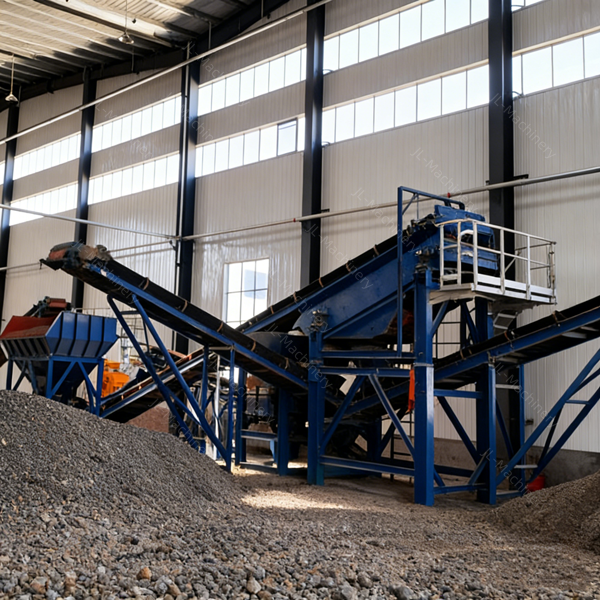
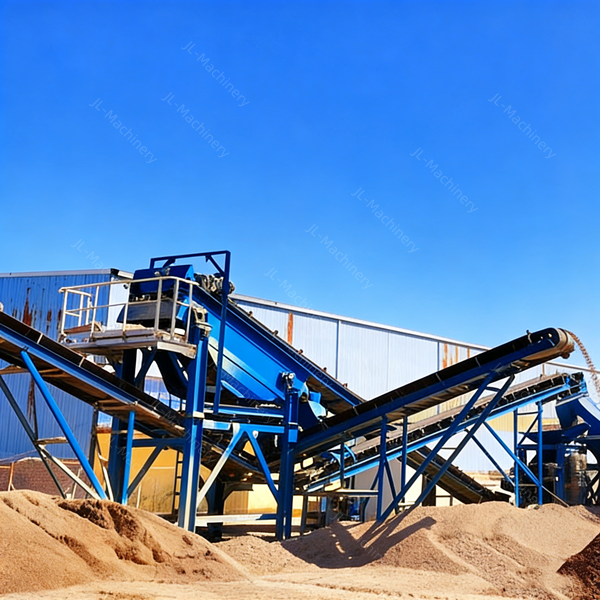
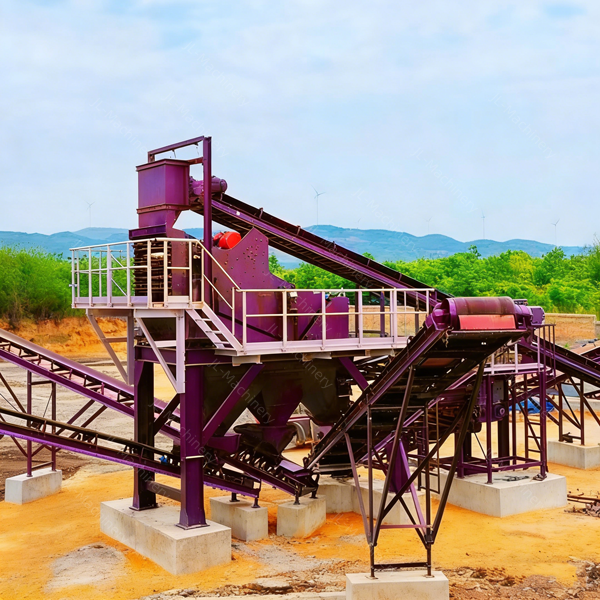
RAP (Reclaimed Asphalt Pavement) Crushing and Screening Equipment

HRA-C50~150
Product Model
110~186kW
Motor Power
50T/h~150T/h
Capacity
RAP (Reclaimed Asphalt Pavement) Crushing and Screening Equipment
60S Quick response
30 min Technical reply
24h design proposal
365 days to receive service needs
RAP (Reclaimed Asphalt Pavement) Crushing and Screening Equipment

Asphalt HRA Milled Material Double-Roller Stripping and Screening Device


1. Equipment Overview  

This equipment is a professional stripping and screening device specifically designed for processing reclaimed asphalt pavement (HRA) material. Its main function is to strip the lump materials generated after asphalt pavement milling, providing properly sized raw materials for subsequent screening and production of recycled asphalt mixtures. It is one of the key pieces of equipment for achieving asphalt pavement material recycling.


2. Equipment Features


Specialized Double-Roller Stripping and Screening Principle  

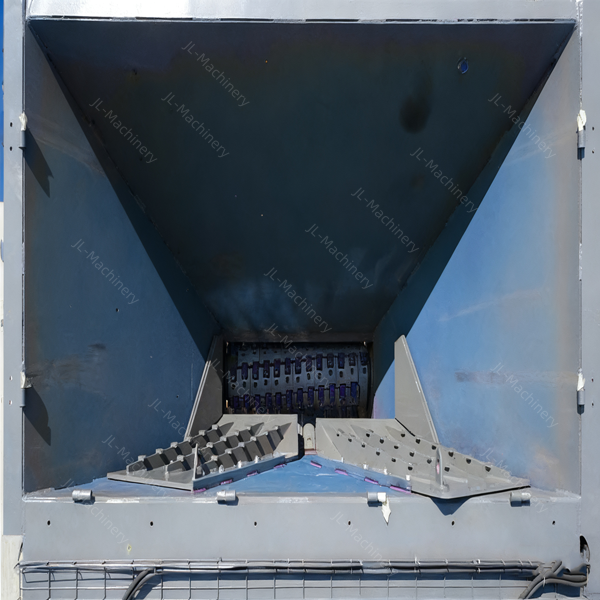
Equipped with two counter-rotating wear-resistant toothed rollers, stripping is primarily accomplished through shearing and squeezing of the HRA material rather than high-speed impact. This method better preserves the original gradation and integrity of the aggregates.


Flexible Protection Design  

The stripping rollers feature a floating or spring-tensioned design, allowing them to automatically retract when encountering oversized or non-strippable materials, thus preventing equipment jamming and effectively protecting core components.


Excellent Wear Resistance  

Key contact components such as the toothed rollers are manufactured from special high-hardness wear-resistant alloy materials, specifically designed for the highly abrasive nature of asphalt materials, ensuring long service life.


Flexibly Adjustable Output Particle Size  

The gap between the two rollers can be conveniently and precisely adjusted via hydraulic or mechanical means, allowing control over the particle size of the final stripped output to meet the requirements of different recycled mix designs.


Product Advantage

Product Advantage

I. Core Technical Advantages


1. Professionally Targeted Design  

Principle Optimized for HRA: Specifically developed for the characteristics of reclaimed asphalt pavement (HRA), adopting a double-roller flexible stripping principle. Stripping of lump milled material is achieved through shearing and squeezing action rather than high-speed impact.  

Core Value: Maximally preserves the original gradation and integrity of aggregates, making it a key factor in producing high-quality recycled asphalt mixtures.


2. Excellent Wear Resistance and Anti-Clogging Performance  

Wear Resistance Guarantee: Core components such as the toothed rollers and wear plates are manufactured from high-hardness wear-resistant alloy materials, ensuring long service life.  

Anti-Sticking and Anti-Clogging Design:  

Stripping Rollers: Employ staggered wear-resistant tooth plates, effectively preventing asphalt material adhesion.  

Screening System: Equipped with high-frequency vibrating screen mesh and anti-clogging screen technology, fundamentally solving the industry problem of fine aggregate adhering to the screen mesh, ensuring continuous and stable production.


3. Intelligent Protection and High Reliability  

Flexible Overload Protection: The stripping rollers feature a floating design or are equipped with spring tensioning devices. When encountering oversized or non-strippable materials, they automatically retract and reset, effectively preventing equipment jamming or damage and protecting core components.  

Modular Robust Structure: The entire production line features a clear equipment layout, with core units (such as the stripping machine and screening machine) built with robust structures for stable operation and low failure rates.


II. Economic and Practical Advantages


1. High Output and Flexibility  

Flexible Configuration: The production line can be modularly configured based on output requirements (50-150 t/h) and number of finished product types (2 or 3 types).  

Controllable Particle Size: The output particle size of the core stripping machine can be easily controlled by adjusting the roller gap, readily meeting different recycled mix design requirements.


2. Energy Saving and Environmental Protection  

Dust Suppression at Source: Utilizes a low-speed stripping principle, reducing dust generation at the source.  

High Efficiency and Energy Saving: Main power equipment (motors, reducers) are selected from high-efficiency, energy-saving models.  

The conveying system adopts variable frequency speed control, allowing speed adjustment according to demand and avoiding idle operation energy consumption.


3. Low Operation and Maintenance Costs  

Convenient Maintenance: Wear parts (such as stripping teeth and screen meshes) adopt standardized and modular designs for quick and easy replacement, minimizing downtime.  

Intelligent Control: Equipped with an integrated electrical control system (such as GE300 type), featuring step-down starting, centralized control, and interlocked start/stop. Simple operation effectively protects motors and reduces labor costs and electrical failure risks.


III. User-Friendly Advantages


1. Simple Installation and Easy Adaptation  

Complete Foundation: Provides comprehensive steel structure foundation design, including maintenance access, guardrails, and safety ladders, ensuring fast and safe onsite installation.  

Smooth Integration: Mature equipment layout ensures seamless integration with upstream and downstream equipment (such as feeders and conveyors), offering high system integration.


2. High Cost-Effectiveness  

Transparent Solution: Clear and transparent configuration list (e.g., sample solution: total price RMB 366,500 for 100-150 t/h three-finished-product solution).  

Diverse Options: Offers a variety of solutions ranging from single units to complete production lines to meet different budgets and production needs, with a clear return on investment.


Working Principle

Working Principle

I. Core Equipment: Operating Principle of HRA Double-Toothed Roller Stripping and Screening Equipment 

This is the “heart” of the entire system, and its operating principle is fundamentally different from traditional impact crushers.

Feeding and Engagement: Asphalt milled material (HRA) is uniformly fed between two parallel toothed rollers by the feeding equipment.

Counter-Rotation and Shearing/Squeezing: The two toothed rollers rotate counter-directionally under power drive. The material is engaged by the rotating toothed rollers and drawn into the stripping chamber.

Flexible Stripping: This is the key point. The roller shafts are not completely rigidly fixed but are designed with a floating clearance or spring buffer device. When encountering oversized or non-strippable hard objects, the roller shafts can temporarily retract, increasing the clearance to discharge the foreign material, and then automatically reset. This prevents equipment jamming or damage, achieving “over-iron protection.”

Particle Size Control: The final particle size of the stripped output is primarily determined by the gap between the two toothed rollers (roll spacing). By adjusting the roll spacing, the maximum output particle size can be controlled to meet the requirements of different recycled asphalt mixtures for HRA aggregate gradation.

Gradation Protection: Since stripping is mainly achieved through low-speed shearing and squeezing rather than high-speed impact, secondary damage to the virgin aggregates is effectively reduced, and the particle size and gradation of the original stones in the asphalt milled material are preserved to the greatest extent. This is crucial for ensuring the quality of the recycled material.

II. Full Stripping and Screening Production Line Workflow

This is a complete system, and its operating principle follows a “stripping – screening – classification” closed-loop or open-loop cycle.

Pre-treatment and Uniform Feeding: A vibrating motor and adjustable gate at the bottom of the storage bin ensure that materials are fed into the system uniformly and controllably, preventing clogging.

Core Stripping: The material is stripped to the preset particle size in the double-toothed roller stripping machine according to the principle described above.

Precise Screening and Classification: The stripped mixture passes through a multi-layer vibrating screen, where it is precisely separated into finished products of different specifications (e.g., 0-5mm, 5-10mm, 10-15mm).

Closed-Loop Circulation: Oversized particles (return material) from screening are automatically returned via a return conveyor to the stripping and screening machine for further processing, forming a closed-loop cycle. This ensures that all materials ultimately become qualified products while improving system efficiency.

Finished Product Output: Qualified finished products of different specifications are transported via their respective finished product conveyors to different stockpiles or storage bins, awaiting use in the asphalt recycling plant.

Summary: The essence of the working principle of this equipment lies in “using gentleness to overcome hardness” and “precise classification.”

“Gentleness” is reflected in the stripping machine’s flexible overload protection and low-speed shearing method, protecting both the equipment and the aggregate gradation.

“Precision” is reflected in the combination of adjustable roll spacing and multi-layer vibrating screens, achieving precise control over the final product particle size.

This enables the production line to efficiently handle sticky and compositionally complex asphalt milled material while producing high-quality recycled aggregates, making it an ideal technical solution for asphalt pavement recycling.


Specification

*The output will vary according to different materials, feed particle size and other factors

Crushing & Screening Equipment Configuration List

Capacity 100-150 t/h (Three Finished Products)

No.Equipment NameModel / SpecificationQtyPower (kW)Remarks
1Storage Bin3.5×2.8×1.7m10.35Above-ground type, with grating
2Feeding ConveyorB800×3m13Variable frequency speed control
3Main ConveyorB800×16.5m17.5Variable frequency speed control
4Return ConveyorB650×9m14
5Double-Toothed Roller Stripping Machine600×750 Type122×2Tooth type optional
6Vibrating Screen3YK1548115Three decks, screen surface 1500×4800mm
7Finished Product ConveyorB650×10m34×3
8Steel Structure Base for Vibrating Screen200×200 H-Beam1 SetIncluding discharge chute and hopper
9Steel Structure Base for Stripping Machine150H-Beam1 SetIncluding discharge hopper
10Electrical Control SystemGE300 Type1 Set100Step-down start, 380V/50Hz


Capacity 50-100 t/h (Three Finished Products)

No.Equipment NameModel / SpecificationQtyPower (kW)Remarks
1Storage Bin3.5×2.8×1.7m10.37Above-ground type
2Main ConveyorB650×16.5m17.5Variable frequency speed control
3Return ConveyorB500×10m14
4Double-Toothed Roller Stripping Machine2PGC450×500111×2V-belt drive
5Vibrating Screen2YK123615.5Two decks, screen surface 1200×3600mm
6Finished Product ConveyorB500×10m34×3
7Steel Structure Base for Vibrating Screen200H-Beam1 SetIncluding discharge chute and hopper
8Steel Structure Base for Stripping Machine150H-Beam1 SetIncluding discharge hopper
9Electrical Control SystemGE300 Type1 Set60Step-down start, 380V


MAYBE YOU ARE INTERESTED IN
More+
Forced Batch Asphalt Mixing Plant

Cold Aggregate Supply System

1.  Adopts frequency control for the belt feeders, ensuring reliable performance. The modular design facilitates convenient and efficient installation and transportation.

2.  The hopper discharge gate is adjustable, equipped with a material shortage alarm device, and the feeding direction can be flexibly adjusted.

3.  The conveyor belt is equipped with a deviation prevention protection device.

4.  The belt feeders adopt frequency conversion speed regulation, offering a wide speed range and high working efficiency.

5.  Each discharge outlet is equipped with a material shortage alarm device, which automatically activates in case of material shortage or bridging.

6.  A vibrator is installed on the sand bin to ensure normal operation.

7.  A screen is installed on the top of the cold aggregate hopper to prevent excessive material from entering.

8.  The conveyor belt uses a seamless round belt for smooth operation and long service life.

9.  The feed inlet of the feeding belt conveyor is equipped with a simple screen to prevent excessive material from entering, improving thermal efficiency and ensuring the operational reliability of the drying drum, hot aggregate elevator, and vibrating screen.


Drying Drum System


1.  The digital control system is compatible with diesel, heavy oil, or natural gas.

2.  The professionally designed drying drum flights work efficiently with the burner to achieve optimal heat exchange.

3.  The wide-range material handling capacity, combined with the external design of the drying drum, helps reduce fuel consumption and save energy.

4.  Temperature indicators are installed at the drum exhaust outlet and the drying drum discharge outlet for easy real-time observation and adjustment.

5.  The optimized geometry of the drying drum flights ensures an extremely efficient drying and heating process, reducing energy consumption. Compared with traditional designs, heating efficiency is improved by 30%.

6.  Due to its high heating efficiency, the drum surface temperature is relatively low, significantly shortening the cooling cycle after operation.

7.  Adopts the Honeywell brand intelligent temperature control system.

8.  Uses an Italian brand high combustion efficiency burner to ensure low exhaust emissions (e.g., CO₂, low NOx, SO₂).

9.  Can be equipped with burners adaptable to diesel, heavy oil, natural gas, coal, or multiple fuels.

10. Adopts international standard components, resulting in low maintenance costs.


Elevating System


1.  Clean-type bucket elevator equipped with an automatic tensioning device for smooth operation.

2.  Both the eccentric discharge outlet and the elevator buckets are made of wear-resistant materials, with multiple noise reduction measures incorporated.


Dust Collection System


1.  Multi-stage dust collection system that collects and recycles dust of different sizes separately, improving material utilization.

2.  Uses a large-area filter bag with pulse jet cleaning and a high-pressure reverse blowing system, achieving high dust removal efficiency and meeting environmental protection standards.

3.  Equipped with high and low temperature protection devices. Uses USA Dupont NOMEX filter bags, which are high-temperature resistant, have a long service life, and are easy to replace without special tools.

4.  Equipped with an adjustable induced draft fan damper to reduce energy consumption and improve energy efficiency.

5.  The primary gravity dust collector collects finer dust, reducing consumption.

6.  The baghouse filter (secondary dust collector) achieves emissions of less than 20mg/Nm³, meeting environmental protection requirements.

7.  An intelligent temperature control system automatically opens the cold air valve when the dust temperature exceeds the set value, preventing high-temperature damage to the filter bags.

8.  Uses high-pressure pulse jet cleaning technology, which helps reduce bag wear, extend service life, and enhance dust removal performance.


Screening System


1.  High-strength, durable screen meshes with a segmented layout.

2.  Fully sealed unit with a negative pressure design to prevent dust from escaping.

3.  Optimized vibration and amplitude to enhance screen performance.

4.  The feed inlet is equipped with a wear-resistant and noise-reducing system, which also ensures even distribution of the mixture.

5.  Open-type doors facilitate inspection and simplify the screen replacement process, reducing downtime.

6.  The optimal combination of vibration direction and screen box inclination ensures effective classification and screening efficiency.


Weighing System


1.  An advanced computer automatic compensation function ensures more accurate weighing control.

2.  Aggregates are discharged in stages, with program-controlled precise batching to guarantee high weighing accuracy.

3.  The asphalt scale is equipped with an improved filter and rectifier, controlled by a fast-acting pneumatic valve.

4.  Adopts a real-time dynamic tracking "weight measurement" method, with coarse and precise asphalt discharge to ensure an accurate and stable aggregate-to-bitumen ratio.

5.  Uses TOLEDO brand load cells to ensure weighing accuracy and guarantee the quality of the asphalt mixture.


Mixing System


1.  Modular integrated design facilitates transportation and installation, with adequate space reserved for maintenance and safety protection facilities.

2.  Full-cycle, three-dimensional mixing tank with high-efficiency mixing device and safety interlock system, ensuring even mixing and reliable operation.

3.  The liner and blades are made of wear-resistant materials, with built-in noise reduction devices to extend service life.

4.  The mixer adopts a three-dimensional mixing design, featuring a series of long arms, short shaft diameters, and bi-directional mixing blades.

5.  The discharge process has been redesigned to achieve the shortest possible discharge time.

6.  The clearance between the mixing blades and the bottom of the mixer is optimized.

7.  Bitumen is sprayed evenly onto the aggregates from multiple points by a pressurized pump, achieving full coverage and high mixing efficiency.


Filler Supply System


1.  The filler silo adopts a modular design for easy transportation and installation.

2.  Equipped with convenient level indicators and other devices to ensure continuous and uniform filler supply.

3.  Reclaimed filler is centrally stored and conveyed (with optional wet treatment), thoroughly solving dust issues.

4.  Provides multiple arch breaking solutions to suit different filler discharge methods.


Bitumen Supply System


1.  Bitumen tanks and pipelines are equipped with insulation layers to reduce heat loss.

2.  Bitumen tanks are equipped with level and temperature display devices for easy monitoring.

3.  The thermal oil heating system is equipped with a complete automatic control system, allowing independent operation and precise control.

4.  The bitumen tank is robust and durable, with different sizes and capacities available upon request. The tank exterior is covered with rock wool insulation material and galvanized steel sheet to minimize heat loss.

5.  Bitumen tanks are heated by thermal oil to ensure the asphalt reaches the required temperature.


Finished Product Storage System


1.  Can be equipped with finished product silos with bottom or side discharge for flexible layout.

2.  The finished product silo adopts a modular design for easy installation; the silo body is equipped with an insulation layer to reduce temperature drop.

3.  The discharge gate is equipped with a heating device to prevent material solidification and dust escape.


Pneumatic System


1.  Key components such as solenoid valves and cylinders have reliable performance and long service life.

2.  Quick connectors are used for air circuit connections, ensuring fast and convenient operation.

3.  The air supply is purified, clean, and free from blockage, effectively extending the service life of the cylinders.


Electrical Control System


1.  The control room is integrated for easy operation, with external protection and internal temperature control design to ensure stable operation under various environmental conditions.

2.  Uses well-known brand electrical components with multi-level interlock protection for stable and reliable operation.

3.  Offers multiple working modes such as automatic, semi-automatic, and manual, making it easy to learn and operate.

4.  Uses PLC or industrial PC with a human-machine interface, featuring production recipe storage and production data recording functions.

5.  Advanced AI large model helps you predict and maintain every equipment component in advance.

6.  Features automatic equipment status diagnosis, fault alarm, and prompt functions.

7.  Uses Siemens electrical components for stable operation even under harsh working conditions.

8.  Uses Omron PLC and touchscreen, offering strong data processing capabilities, automatic control of data tables, and real-time storage of various operating data.

9.  All system power switches can be controlled via the control panel for simple and easy operation.

10. Multi-language compatibility, with display language selectable according to customer needs.

11. The control cabinet has a protection rating of IP55, complying with the world's highest industry standards.

12. Equipped with a container-type control room featuring thermal and acoustic insulation.

13. Equipped with global remote automatic detection function.


.
Drum (Continuous) Asphalt Mixing Plant

Main Structure and ComponentsThe main structure consists of the following systems:


Cold Aggregate Supply System

It includes multiple cold feed bins, belt feeders, and a collecting belt conveyor, responsible for feeding aggregates into the drum steadily and proportionally.


Drum Assembly

This is the "heart" of the plant. It is a large, long cylindrical drum with a certain inclination angle, supported by riding rings and rotated at a constant speed by a drive unit. Various types of lifting flights are installed on the inner wall of the drum to lift and cascade the material, ensuring full contact with the hot gas stream and even mixing.


Burning System

It includes the burner, fuel (oil or gas) supply system, and blower fan, providing the heat source for drying and heating the aggregates.


Bitumen Supply System

It includes the insulated bitumen tank, bitumen pump, metering device, and spraying device, responsible for accurately metering and spraying the bitumen.


Dust Collection System

Due to continuous production, a large amount of dust is generated. Therefore, high-efficiency dust collection equipment, typically a baghouse filter, must be installed to capture dust generated during production and meet environmental requirements.


Finished Material Conveying and Storage System

It lifts the finished material from the drum and conveys it to the hot storage silo for temporary storage.


Control System

A modern control center, using a PLC (Programmable Logic Controller) and computer, realizes automatic control and monitoring of the entire production process, ensuring accurate proportions and stable temperature.


Mixing System


Based on the flow direction relationship between the hot gas stream and the material inside the drum, drum mixers are mainly divided into two types:


Counterflow Drum Mixer

Features: The direction of the flame and hot gas stream is opposite to the direction of material flow. The hot gas enters at the discharge end and exits at the feed end.

Advantages: High thermal efficiency and lower fuel consumption, as cold material first contacts the lower-temperature exhaust gas for preheating, preventing the bitumen from being burned at high temperatures.

Disadvantages: Bitumen fumes and dust tend to escape at the feed end, requiring higher dust sealing performance.


Parallel-flow (Co-current) Drum Mixer

Features: The direction of the flame and hot gas stream is the same as the direction of material flow.

Advantages: Material contacts the highest-temperature flame immediately upon entering the drum, resulting in fast drying and heating.

Disadvantages: If not properly controlled, bitumen can easily age at high temperatures, and thermal efficiency is slightly lower than that of counterflow type. This is the more common type currently.


.
Environmental Protection Type Forced Batch Asphalt Mixing Plant

The main components of the plant consist of the following systems:


Cold Aggregate Supply System: Cold feed bins, belt feeders, collecting belt conveyor.


Drying & Heating System: Drying drum, burner.


Hot Aggregate Lifting, Screening & Storage System: Bucket elevator, vibrating screen, hot bins.


Weighing System: Aggregate scale, filler scale, bitumen scale.


Mixing System: Twin-shaft forced mixer.


Dust Collection System: Main induced draft fan, gravity dust collector, baghouse filter.


Filler Supply System: Filler silo, filler elevator, screw conveyor.


Bitumen Supply System: Bitumen tank, thermal oil heater, bitumen pump.


Finished Mixture Storage System: Finished product silo.


Control System: Fully automatic computer control system, enabling intelligent and visualized production.


Environmental Enclosure: Main tower enclosure, etc.


.
Learn more >>
MAYBE YOU ARE INTERESTED IN
Jinlei MACHINERY knows what you expect from a mining project, and we are making it happen with unrivaled products and services.
Leave Message
×

{::lang('LEAVE_MESSAGE')}

Name:
Country:
Email: *
WhatsApp :
Message :