
 简体中文
简体中文 English
 Русский язык
 WhatsApp: +86 15083395008
MAYBE YOU ARE INTERESTED IN
Jinlei MACHINERY knows what you expect from a mining project, and we are making it happen with unrivaled products and services.
Leave Message
I. Equipment Overview
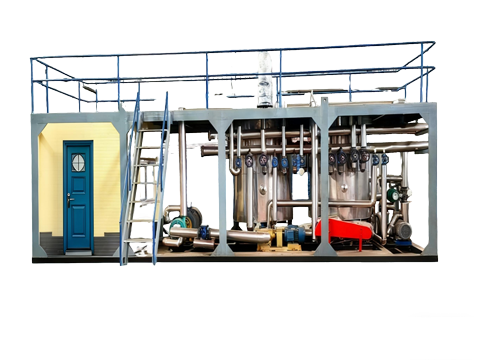
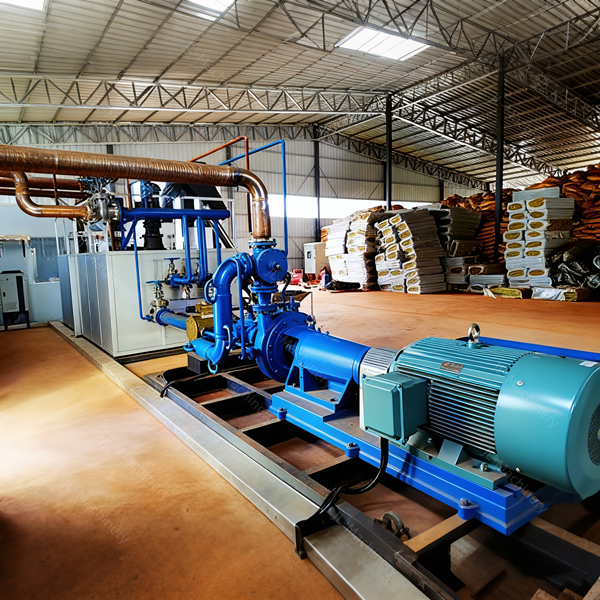
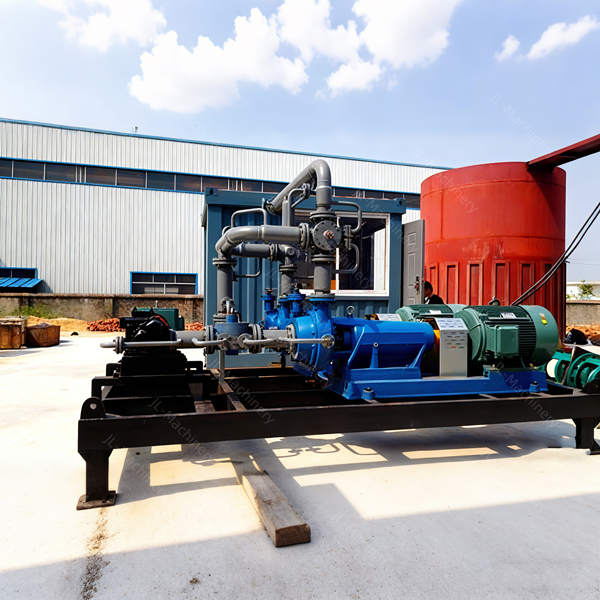
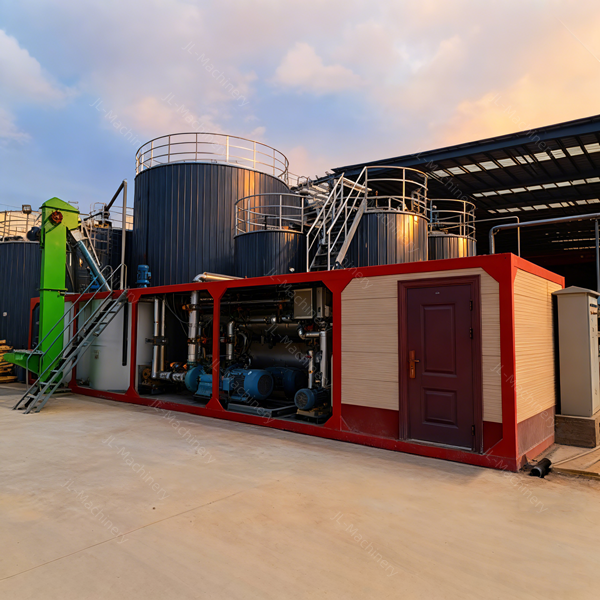
The polymer modified asphalt equipment is a continuous or batch production system integrating heating, metering, mixing, shearing, grinding, temperature control, and automatic control. The equipment typically adopts a modular design with a compact structure, making it easy to transport and install, suitable for stationary or mobile production scenarios.
II. Main System Composition
Base Asphalt Storage and Heating System:
Employs a shell-and-tube or spiral plate heat exchanger heated by thermal oil to rapidly heat the base asphalt to the process temperature (typically 160–190°C).
Equipped with insulated asphalt tanks, unloading troughs, asphalt pumps, etc.
Polymer Feeding and Metering System:
Uses a screw conveyor or pneumatic conveying to continuously and accurately feed modifiers such as SBS into the mixing tank according to the formula.
Equipped with variable frequency speed control, weighing modules, or flow meters to achieve real-time metering and ratio control.
Mixing and Pre-shearing System:
Features a mixing tank with an agitator to initially mix the asphalt and modifier evenly.
Some equipment is equipped with a pre-shearing pump to preliminarily crush large particles, protecting the downstream colloid mill.
High-Speed Shearing and Grinding System (Core)
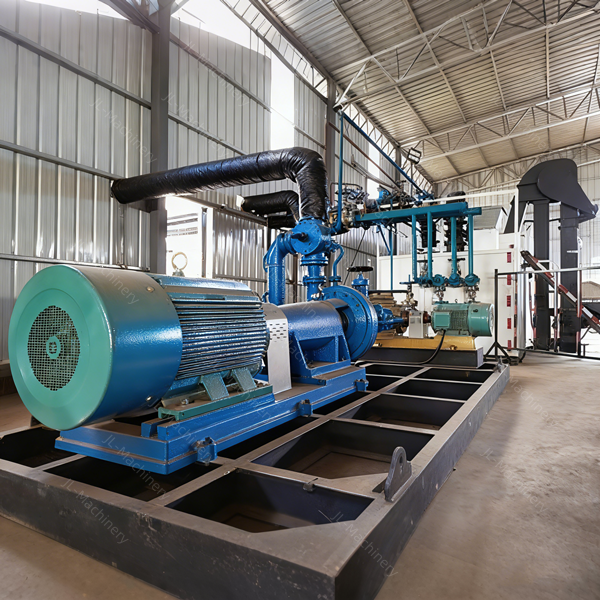
Adopts a high-shear colloid mill (such as the JTMW265T model), where the mixture undergoes multiple cycles of shearing, grinding, and squeezing through high-speed rotating grinding discs, ensuring the polymer is uniformly dispersed in the asphalt, achieving particle sizes down to the micron level.
The colloid mill is typically equipped with an independent lubrication and cooling system to ensure long-term stable operation.
Temperature Control and Development System:
The modified asphalt continues to be stirred and insulated in the finished product tank, promoting full polymer development and stability.
The tank is equipped with thermal oil coils or a jacket to maintain the process temperature.
Automatic Control System:
Employs PLC + industrial PC (such as Siemens or Schneider brands) to achieve fully automated process control.
Features include recipe settings, real-time monitoring, fault alarms, data logging, and printing functions.
Supports manual/automatic switching and is equipped with a touchscreen operation interface.
Auxiliary Systems:
Thermal Oil Heater (Coal or Oil-Fired): Provides the heating medium.
Exhaust Gas Treatment System (Optional): Treats asphalt fumes to meet environmental requirements.
Compressed Air System (Optional): Used for pipeline cleaning and valve control.
Filtration System: Protects pumps and the colloid mill from impurities.
I. Leading Core Technology
High-Shear Colloid Mill: Adopts a multi-stage tooth profile internal meshing structure, integrating advanced technologies from the United States and Germany, enabling “one-time shearing success” with polymer dispersion fineness ≤5μm, and in some cases reaching 0.1μm.
Efficient Grinding System: The colloid mill combines shearing and grinding functions, with processing capacity 4–10 times that of conventional equipment, suitable for various modifiers such as SBS, SBR, EVA, and PE.
II. Optimized Structural Design
Compact and Modular: Highly integrated equipment with a complete mobile design (e.g., CTZL-10 is only 10.5×2.4×2.4m), facilitating transportation and rapid installation.
Single-Tank Continuous Process: Achieves “real-time metering and continuous production,” eliminating intermediate transfer, reducing energy consumption, and minimizing asphalt aging.
III. Intelligent Control and Automation
PLC + Industrial PC System: Supports fully automatic/manual control with real-time monitoring of parameters such as temperature, flow rate, liquid level, and current.
Programmable Recipes: Users can preset multiple modified formulas; the system automatically executes and stores production data, supporting report printing and traceability.
Fault Self-Diagnosis and Alarm: Equipped with multiple protections for high temperature, high pressure, and liquid level limits, with automatic interlock shutdown to ensure safety.
IV. Energy Efficiency and Environmental Protection
Efficient Heat Exchange System: Utilizes spiral plate/shell-and-tube heat exchangers, offering rapid heating (≥30°C/h) and high thermal efficiency.
Low Power Design: Colloid mill power is only 37–75kW (depending on model), with total installed power lower than similar equipment in the industry.
Optional Exhaust Gas Treatment: Equipped with a condensation absorption purification system, meeting national environmental emission standards.
V. Multi-Functionality and Scalability
One Machine, Multiple Uses: By changing components or adjusting processes, it can produce SBS modified asphalt, rubber powder asphalt, emulsified asphalt, and more.
Optional Combined Equipment: For example, the TFGJR series can simultaneously produce modified asphalt, rubber powder asphalt, and emulsified asphalt, meeting diverse project requirements.
Strong Compatibility: Suitable for various domestic and international base asphalts and modifiers.
VI. Reliability and Durability
Branded Key Components: Colloid mill bearings are from SKF (Sweden), seals from U.S. brands; electrical components are selected from Siemens, Schneider, Omron, etc.
Long Service Life Design: The main equipment structure has a service life of up to 20 years; the colloid mill is equipped with an independent lubrication and cooling system, supporting long-term continuous operation.
VII. Ease of Operation and Convenient Maintenance
User-Friendly Interface: Dual operation mode with touchscreen + industrial PC, featuring visualized processes and clear parameters at a glance.
Convenient Maintenance: Modular design makes major components easy to inspect and replace. Filters, pumps, valves, etc., are all equipped with jacket insulation to prevent asphalt solidification and clogging.
The polymer modified asphalt equipment rapidly heats the base asphalt to the process temperature using thermal oil, and initially mixes it with precisely metered polymer modifiers in the mixing tank. The mixture undergoes high-speed grinding, squeezing, and tearing in the high-shear colloid mill, uniformly dispersing the modifier down to the micron level to form homogeneous modified asphalt. Subsequently, it is kept warm and stirred in the finished product tank with stabilizers added to complete the development process. The entire system adopts PLC automatic control, achieving continuous and precise production.
| Model | Output (t/h) | Total Power (kW) | Main Unit Dimensions (mm) | Expansion Tank (m³) | Agitator Power (kW) | Base Asphalt Pump (m³/h) | Heat Exchanger (㎡) | Colloid Mill Power (kW) | Metering Method | Control System |
|---|---|---|---|---|---|---|---|---|---|---|
| JLG-5 | ≥5 | 60 | 4800×2200×2200 | 1.5 | 2.2 | 9.8 | 40 | 45 | Flow Meter + Scale | Manual Push Button |
| JLG-10 | ≥10 | 100 | 6000×2400×2700 | 3 | 4 | 24 | 80 | 75 | Flow Meter + Vector Metering | PLC + Industrial PC |
| JLG-15 | ≥15 | 160 | 8500×2400×2700 | 6×2 | 7.5×2 | 34 | 100 | 90 | Flow Meter + Vector Metering | PLC + Industrial PC |
| JLG-20 | ≥20 | 200 | 10200×2400×2700 | 6×2 | 7.5×2 | 34 | 100 | 75×2 | Flow Meter + Vector Metering | PLC + Industrial PC |
| JLG-30 | ≥30 | 240 | 10500×2400×2700 | 6×2 | 7.5×2 | 42 | 120 | 90×2 | Flow Meter + Vector Metering | PLC + Industrial PC |
| JLG-40 | ≥40 | 350 | 4500×2200×2200 | 18×2 | 15×2 | 56 | 200 | 132×2 | Flow Meter + Vector Metering | PLC + Industrial PC |
| JLG-50 | ≥50 | 420 | 5500×2200×2200 | 22×2 | 22×2 | 56 | 300 | 160×2 | Flow Meter + Vector Metering | PLC + Industrial PC |